Distinct personalities
Much like the country makes people big, people make the country big as well. The relatively small Vodnjan area produced some renowned figures in various fields of activity. Let us remember some of them.
Antonio Smareglia (Pula 1854 – Grado 1929) was a renowned composer whose father had roots in Vodnjan. Smareglia is fondly remembered by the people from Vodnjan because he immortalised Vodnjan’s folklore, customs, tradition and autochthonous dialect in the opera Istrian Wedding (Nozze istriane). It was during his stay in Vodnjan in 1894 that he created this well-known lyrical drama in three acts in collaboration with Luigi Illica. Istrian Wedding is his most performed opera with well-known characters like Marussa, Bara Menico, Biagio, Lorenzo and Nicola. Upon his return to Trieste, he devoted himself to the creation of the new movement called “theatre of poetry”. Although the Italian public did not always like his ideas, he nevertheless created some of his best works there, blind at that. He dictated his scores to his sons and students, collaborating with the greats like Toscanini, Lehár, Strauss and James Joyce.
Pietro Marchesi (Vodnjan 1862 – 1929) was an important resident of Vodnjan, an industrialist and founder of the local electricity distribution company. Considered to be a pioneer of mechanical production machines with which he equipped mills, oil mills, a distillery, a vinegar and pasta factory. He introduced the first steam-powered machines for threshing and grinding grains and an olive press, for whose operation he used electric energy in 1883. He was the first in Istria to have introduced electric energy into Vodnjan’s houses in 1889. In addition to his industrial innovations, Marchesi was also a painter, musician and writer. His landscapes, marinas, portraits and altarpieces of great artistic value are widely known. It was he who created the scenography for his friend Smareglia’s opera Istrian Wedding.
Erminio Vojvoda (Vodnjan 1902 – Pula 1991) was the most prominent shoemaker in Vodnjan. His name was well known beyond Vodnjan and Istria for he made shoes both for the residents of Vodnjan and for ladies and gentlemen from all parts of Europe. This artisan was the famous creator of many high fashion models of the time. His sketches and drawings are found in most important European fashion magazines published in Paris, London, Vienna and Milan. Today, traces of his life like hand tools, lasts, blueprints, shoes, pictures, plaques and magazines are exhibited at the Ecomuseum Istrian de Dignan situated on Vodnjan’s Narodni Trg Square. In addition to being a master of his craft, he was also a master of his hobby – cycling, so that his name is also found on the trophy for the winner of the first Istrian cycling race – Giro Ciclistico dell’Istria meridionale.
Venerio Trevisan (1797. –1871.)
weaver and upholsterer who painted the churches of Vodnjan.
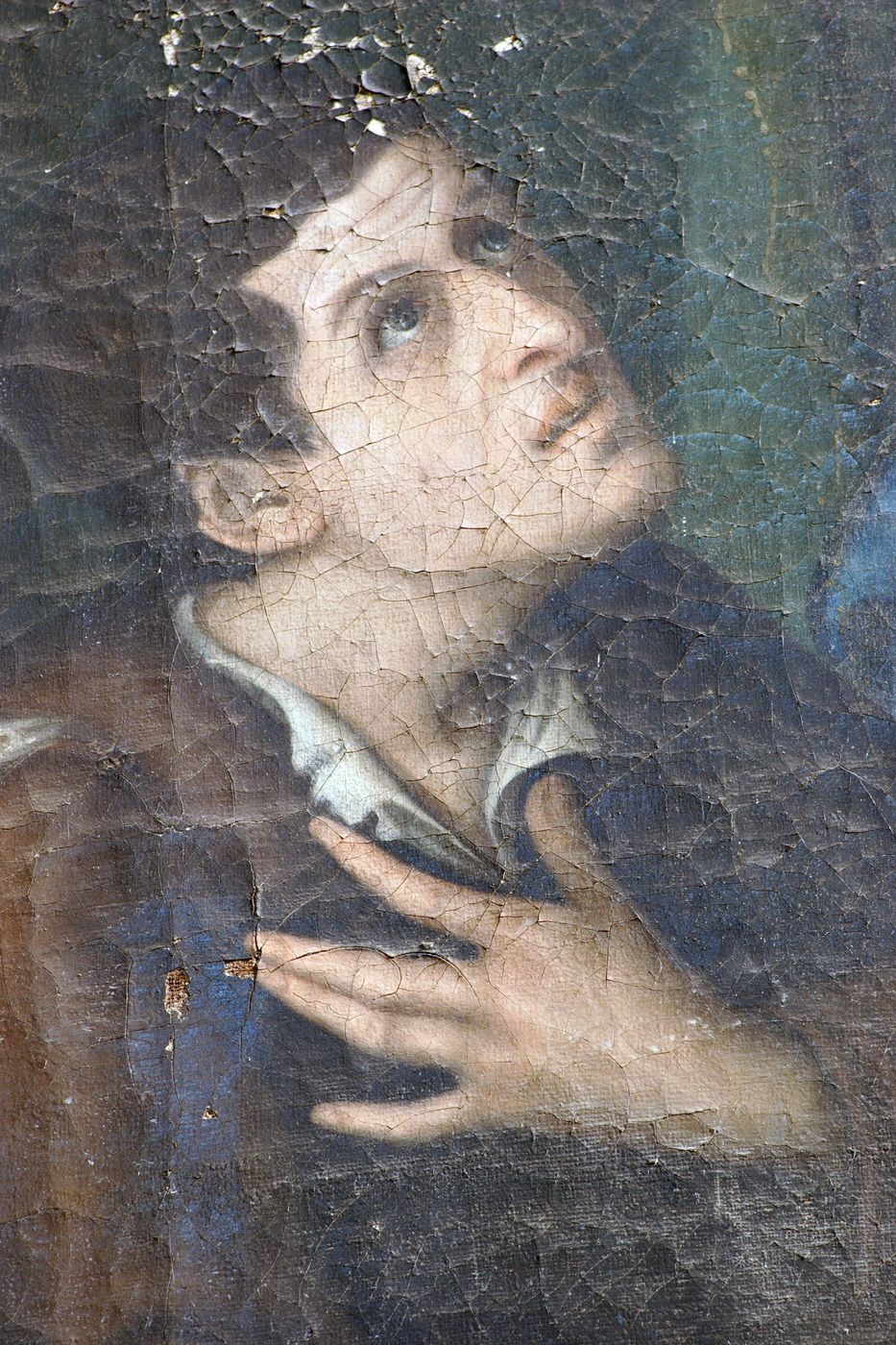
Born in Vodnjan, Venerio Trevisan came from a family of weavers. He learned the trade of weaving and upholstery, but life led him towards art. He studied painting under Gaetano Grezler, a painter from Verona who arrived in Vodnjan in 1818 to decorate the new parish church. It was under his guidance that Trevisan began his artistic journey.
His first serious commission came in 1826 – the restoration of the altarpiece of St Anne. From then until the 1860s, he created several religious works, mainly for churches in Istria. Most of his paintings were made for the churches in his native Vodnjan, where his best-known works are still preserved: St Philomena (1841), the Way of the Cross cycle (1842), Christ Giving the Keys to St Peter (1843), The Baptism of Christ, The Immaculate Conception, and The Holy Trinity.
His works can also be found in the Franciscan monastery in Pazin (e.g., The Last Supper, 1837), in the parish church in Rovinj (The Holy Trinity With Saints), and in the churches in Marčana, Krnica, Hreljići, and Kanfanar.
Although technically imperfect, Trevisan’s portraits capture identity and expression. For example, Portrait of Canon Giovanni Tromba (1846) and Portrait of Don Pasquale del Caro (1852) are typical Biedermeier bourgeois portraits – somewhat naive, yet rich in detail and humorous observation. His work is an intriguing blend of local tradition, religious commission, and personal stylisation.
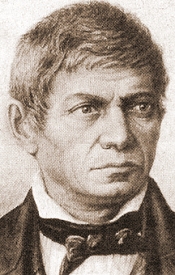
Bartolomeo Biasoletto (1793–1858.), pharmacist, botanist and founder of the Trieste Botanical Garden.
Unlike Trevisan, Biasoletto distinguished himself as a scientist. Educated in Vodnjan, Krk and Vienna, he began his career as a pharmacist. He worked in Vodnjan, Rijeka, Trieste and Wels (Austria). A turning point in his life was the death of the owner of the renowned Trieste pharmacy Orso Nero, which Biasoletto took over and turned into a centre of scientific and pharmaceutical activity.
At first, he researched zoology and mineralogy, but a meeting with German botanists from Regensburg in Trieste steered him towards botany. From then on, he intensively studied the plants of Istria, Friuli, Kvarner, Dalmatia and Carniola, collaborating with well-known European and local scientists.
Together with Muzio de Tommasini, he accompanied Frederick Augustus II, the King of Saxony, in his travels along the eastern Adriatic in 1838 and 1845. In 1825 he founded the Botanical Garden in Trieste and was also one of the founding fathers of the Pharmaceutical Society. During the cholera outbreak in the 1840s, he actively joined the fight against the disease that took his wife and daughter.
Biasoletto published in renowned scientific journals such as Flora ratisbonensis, Isis, and Linnaea. In 1841 he published a book on the king’s journey – Relazione del viaggio fatto nella primavera del 1838 and Escursioni botaniche sullo Schneeberg (1846). Although many plants temporarily bore his name (e.g., Trifolium biasoletti, Artemisia biasolettiana), the names did not become official.
In recognition, he was admitted to several scientific societies, including the Botanical Academy of Regensburg and the Horticultural Academy of Vienna. His research is deeply embedded in the floral literature of the nineteenth century.
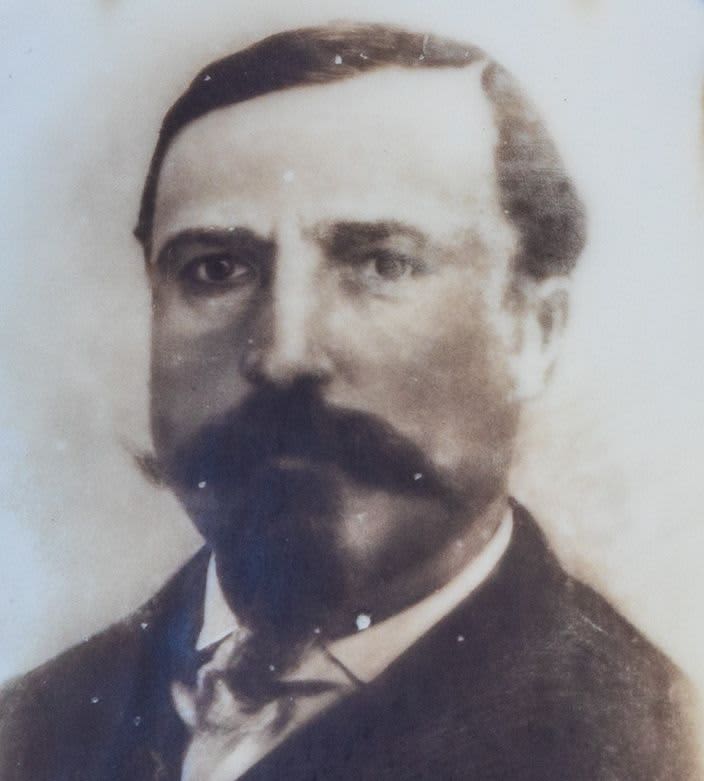
Angelo Cecon (1830–1873), benefactor whose fortune brought a hospital and a school to Vodnjan.
Among the many notable historical figures who shaped the identity of Vodnjan, the name of Angelo Cecon holds a special place – not for political power or artistic fame, but for the noble vision with which he turned a personal family tragedy into a lasting legacy for the community.
Angelo Cecon came from a distinguished merchant family from Carnia that settled in Vodnjan in the early nineteenth century. Thanks to his reputation and engagement in local affairs, he was elected Podestà of Vodnjan in 1867. Yet, for unknown reasons, he declined the position. He died young, at the age of 43, his cause of death recorded as “marasme” – a term then commonly used to describe physical exhaustion or wasting.
Three years earlier, his wife Lucia Teresa had passed away, leaving Angelo alone with their frail son Antonio. Fearing for his son’s future, Angelo wrote a prophetic will in 1873: if Antonio were to die before the age of twenty and without heirs, the entire family estate would be donated to Vodnjan for the establishment of an agricultural school and a hospital for the poor and the infirm.
Sadly, the worst-case scenario came true. Antonio died in 1883, before turning twenty, and his father’s will took effect. It marked a new chapter in Vodnjan’s history – one in which personal tragedy resulted in a public benefit.
Although the school and hospital ceased operating in the mid-twentieth century, the spirit of benefactor Angelo Cecon still endures. In an age when value is often measured by profit, Cecon’s story reminds us that true wealth is what remains within the community – lasting far beyond any individual life.